

2027 Nissan Rogue Hybrid Preview
2027 Nissan
Rogue Hybrid Preview
Nissan is doing right by its best-selling nameplate by expanding its offerings with gas-electric alternatives. First came the 2026 Rogue Plug-in Hybrid, and early this winter the nameplate will return with another gas-electric approach that has the automotive world brimming with excitement.
The 2027 Rogue Hybrid will debut the automaker’s third-generation e-POWER system, giving it the driving characteristics of an EV without the need to plug in, while maintaining the convenience of a traditional internal combustion engine. A dual-motor electric drive unit will power the wheels directly for instant torque and smooth acceleration, while drawing power from a lithium-ion battery pack that is continuously recharged by a gasoline engine. This novel setup will give Rogue Hybrid drivers the efficiency and responsiveness they crave from an EV without the limiting logistics of a fully electric vehicle: there will be no need to plan trips around charging stops or to plug in regularly at home. Just like any other internal combustion vehicle, the Rogue Hybrid will be ready to go as long as it has gas in its tank. That said, its technology, specifically the role of the gas-burning engine, is quite different from that of the traditional hybrid powertrain, as we explain in the next section.
Shop Nissan Rogue Hybrid
Novel Hybrid Technology
Like other hybrids, the new Rogue variant will pair a traditional gasoline engine with a dual-motor electric drive unit (one on each axle) and all-wheel drivetrain, but its unique operation will set it apart. In Nissan’s e-POWER system, which will make its U.S. debut in the Rogue Hybrid, the 1.5-liter three-cylinder engine will not provide direct propulsion to the wheels. Where conventional hybrid systems have a gas engine and electric motor working in tandem and sharing propulsion duties, the gas and electric components of e-POWER serve separate roles: instead of powering the wheels, the gas engine acts as a generator, recharging the battery pack as the Rogue Hybrid drives. The electric motors then directly drive the wheels, with no aid from the engine. This configuration will allow the Rogue Hybrid to operate more like a battery electric vehicle (BEV), providing instant torque and avoiding the transition between electric and internal combustion power that most hybrids experience. Where it differs from the typical BEV, though, is that the lithium-ion battery pack will require no external charging, eliminating the need to find a charging station on the road, plug in at home, or wait for the battery to recharge.
The Rogue Hybrid’s dual-motor Intelligent All-Wheel Drive will allocate power from front to rear or side to side to maintain consistent grip and stability across varied conditions and terrain. Nissan’s e-Pedal one-pedal driving system will further enhance convenience by allowing drivers to smoothly accelerate and decelerate using only the gas pedal—another attribute of the typical BEV. Regenerative braking will capture energy during braking, replenishing the battery while providing controlled deceleration.
All-New Aesthetics
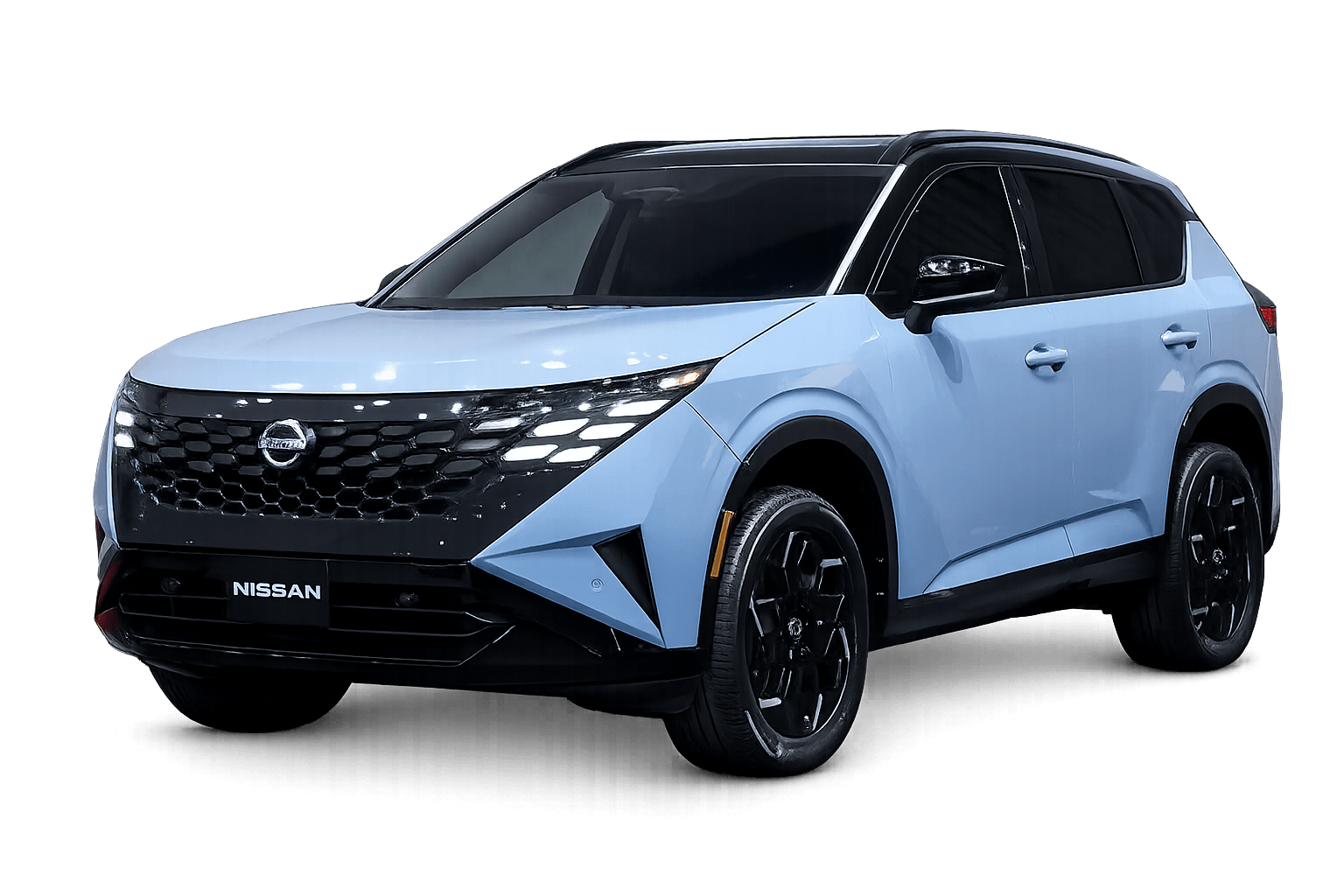
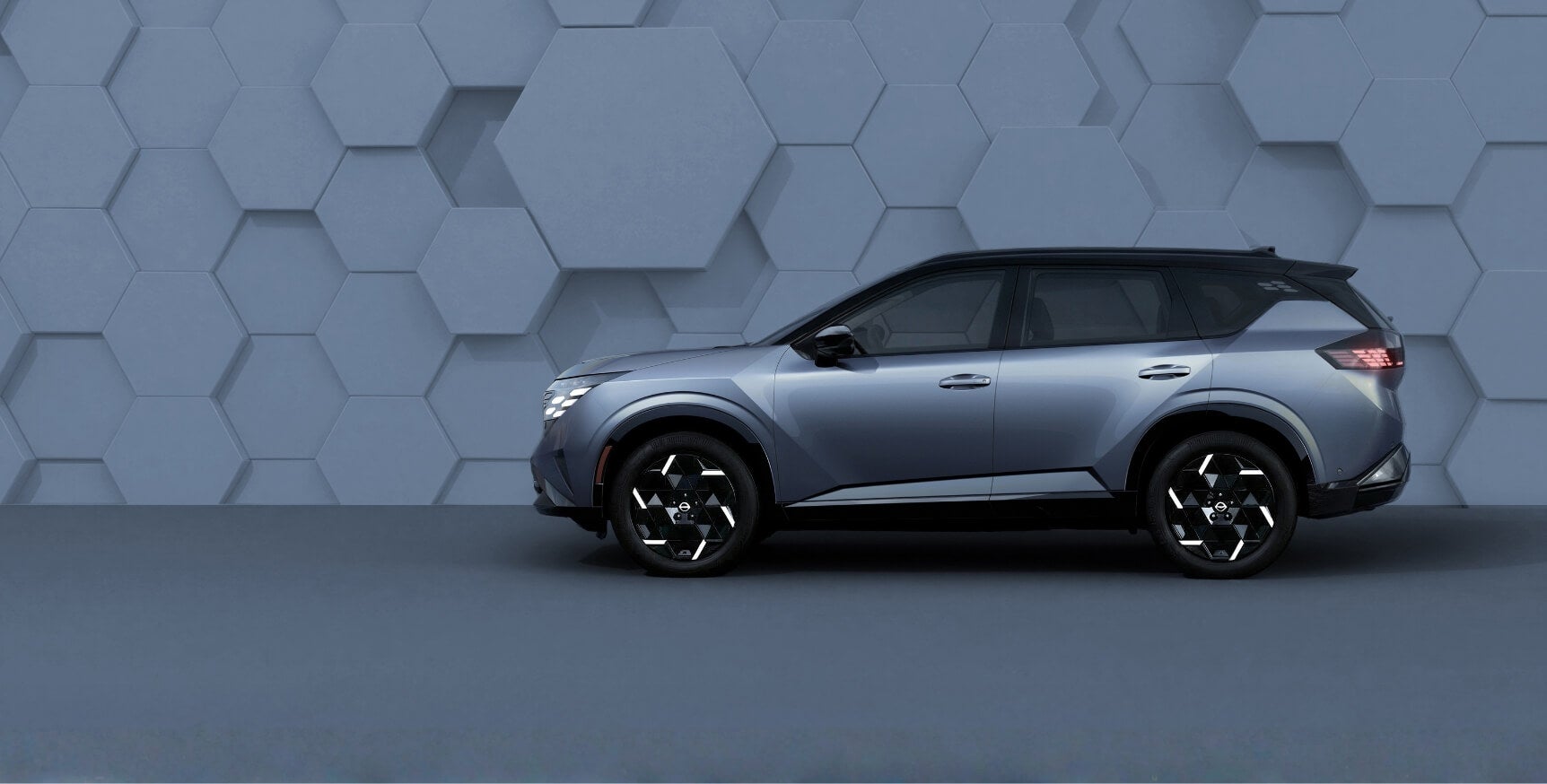
While Nissan hadn’t yet released information regarding the Rogue Hybrid’s dimensions or design by the time of this writing, the available images indicate a fresh and modern direction. The front end will center around a honeycomb-style grille with integrated headlights that frame an illuminated center badge above a commanding fascia and slim bumper. Sharp lines will define the exterior for a contemporary, angular look. These images also reveal a two-tone color scheme, with a black roof contrasting with the body color. Wheel designs will echo the body and grille’s styling cues, incorporating a similar two-tone honeycomb pattern.
Driver-Assistance and Safety
Nissan has not confirmed any of the Rogue Hybrid’s safety technologies, but buyers can expect elements of the automaker’s Nissan Safety Shield 360 safety suite and ProPILOT Assist driver-assistance system. Nissan Safety Shield 360 includes automatic emergency braking with pedestrian detection, blind spot warning, lane departure warning, rear automatic braking, rear cross-traffic alert, and high beam assist. The standard Rogue also has parking sensors and a driver alertness monitor, as does the Rogue PHEV, which adds traffic sign recognition and an HD Enhanced 3-D Around View monitor with 360-degree coverage and fixed views. Given the Rogue Hybrid’s similarity to the other Rogue variants, these features certainly wouldn’t be out of the question for the new model. Nissan ProPILOT Assist, standard on the Rogue PHEV and available on higher Rogue grades, could potentially enable semi-autonomous driving on the Rogue Hybrid through adaptive cruise control with automatic curve slowdown, freeway cruise control support, and active lane centering.
Infotainment and Connectivity
No details regarding infotainment have been confirmed, but current Nissan models similar to the Rogue Hybrid provide clues about what may be offered. The standard Rogue includes a touchscreen system with Siri Eyes Free voice recognition, Android Auto and Apple CarPlay, Bluetooth phone connectivity and audio streaming, SiriusXM satellite radio, and speed-sensitive volume control. The Rogue PHEV adds standard onboard navigation, suggesting that some of these features could appear in the Rogue Hybrid’s multimedia suite. Access to the MyNISSAN mobile app and NissanConnect services is also likely.

Sales tax, title, and registration fees are not included in vehicle prices or manufacturer offers that appear on this site and must be paid by the purchaser. $420 doc & title prep fees apply to all vehicle sales, including manufacturer offers that may appear on this website (with the exception of vehicle sales under $10,000 which incur only a $20 title preparation fee). MSRP is the manufacturer’s suggested retail price of the vehicle. Stock photos may not represent actual vehicle. Listed MPG are based on EPA mileage ratings. Use for comparison purposes only. Your mileage will vary depending on driving conditions and how you drive and maintain your vehicle. See full site disclosure here.